16-bit TIFF
A full-resolution archival master with embedded ICC profile — the file you keep forever.
Negative Converter · Film conversion & restoration for macOS
Negative Converter turns scanned black-and-white and color negatives into finished photographs. Not with a naive color flip — with a conversion engine modeled on how film prints actually render density, tuned against hand-corrected reference conversions, and honest enough to preserve the warmth of the light that was really there.
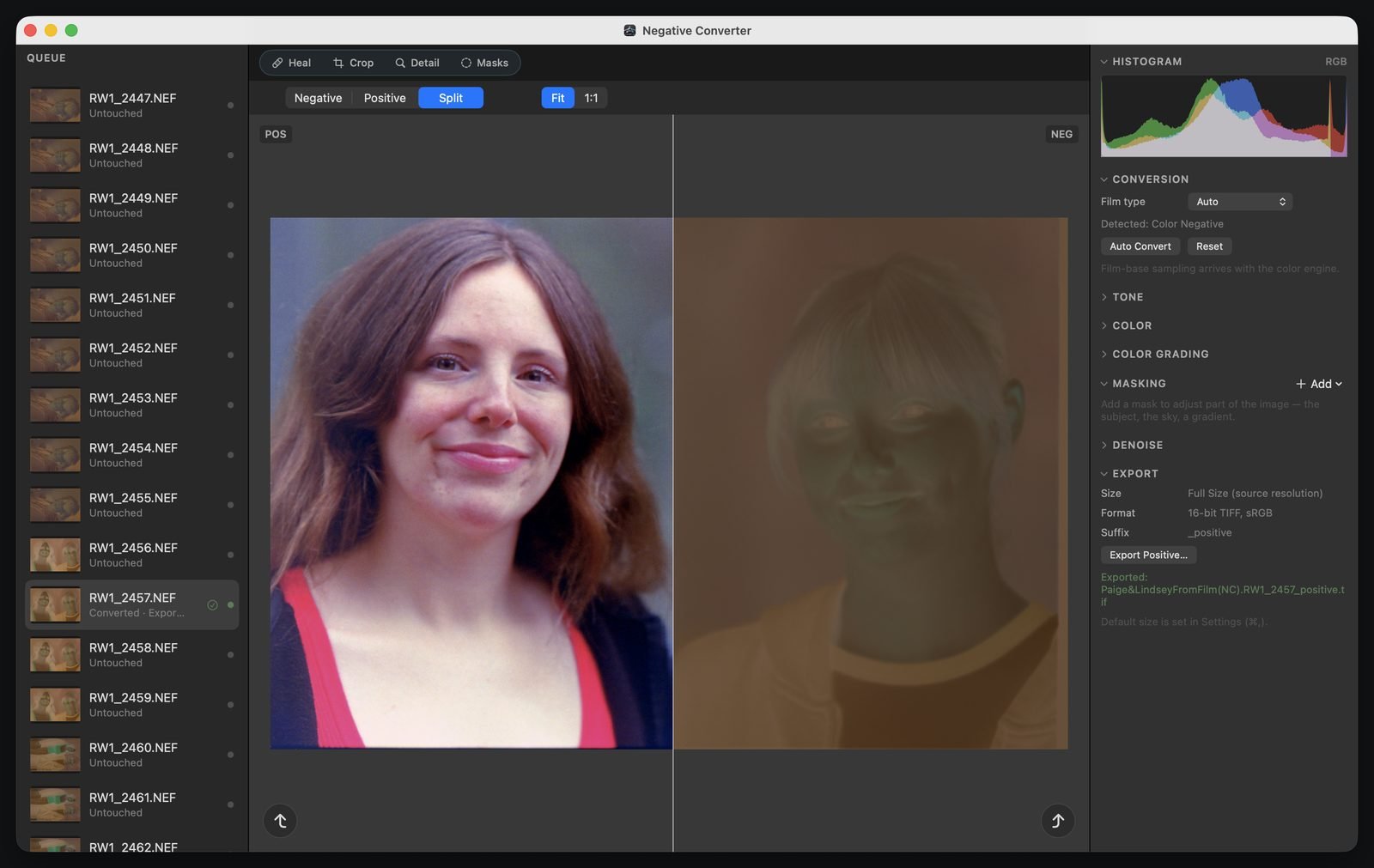
The conversion
Color negative film hides its picture behind an orange mask, crossed dye layers, and a density curve designed for a printing process that no longer exists on most desks. Negative Converter's engine works the way a good print did: it analyzes each scan's actual densities, removes the mask per channel, and remaps tones through a film-print-style curve — calibrated against real, hand-corrected reference conversions, not a generic inversion.
Color balance is found in the scan itself: the engine neutralizes from the image's own grey evidence, and on-device face detection anchors skin tones toward natural values. Deliberately, it does not sterilize every frame to grey — a warm room stays warm, evening light stays evening light. Film type is detected automatically; a roll of mixed black-and-white and color scans just works.
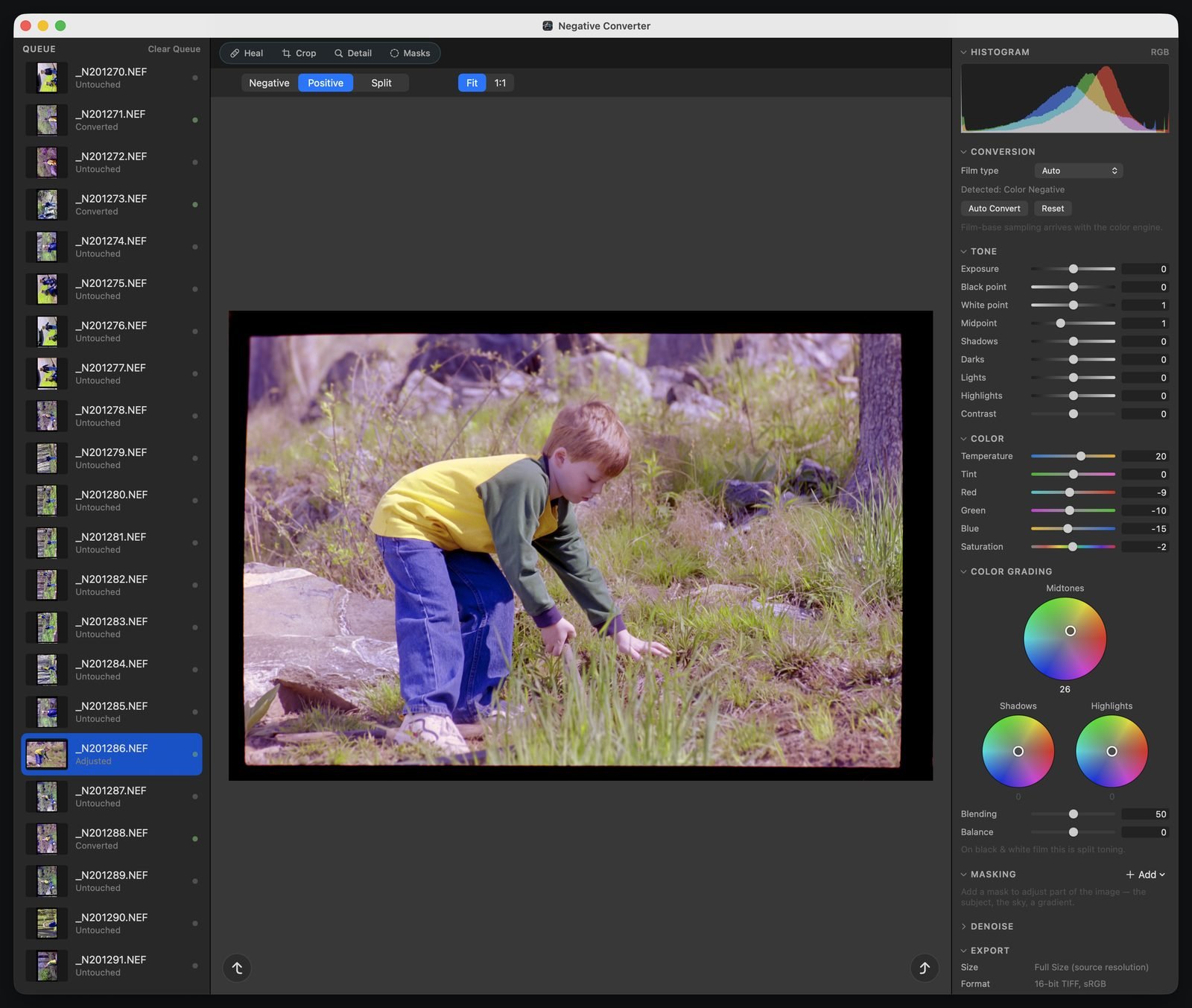
The darkroom
Auto-conversion gets each frame most of the way; the darkroom takes it the rest. Full tone control from black point to highlights. Temperature, tint, and per-channel color balance. Three-way color grading wheels for shadows, midtones, and highlights — which double as split toning for black-and-white. Lightroom-style crop with free-angle straighten that can never leave blank corners in an export.
Fixed one frame from a roll? Copy its settings and paste them across the entire selection in a single undo step. Every slider updates a live preview instantly, and a full-quality render settles in the moment you pause.
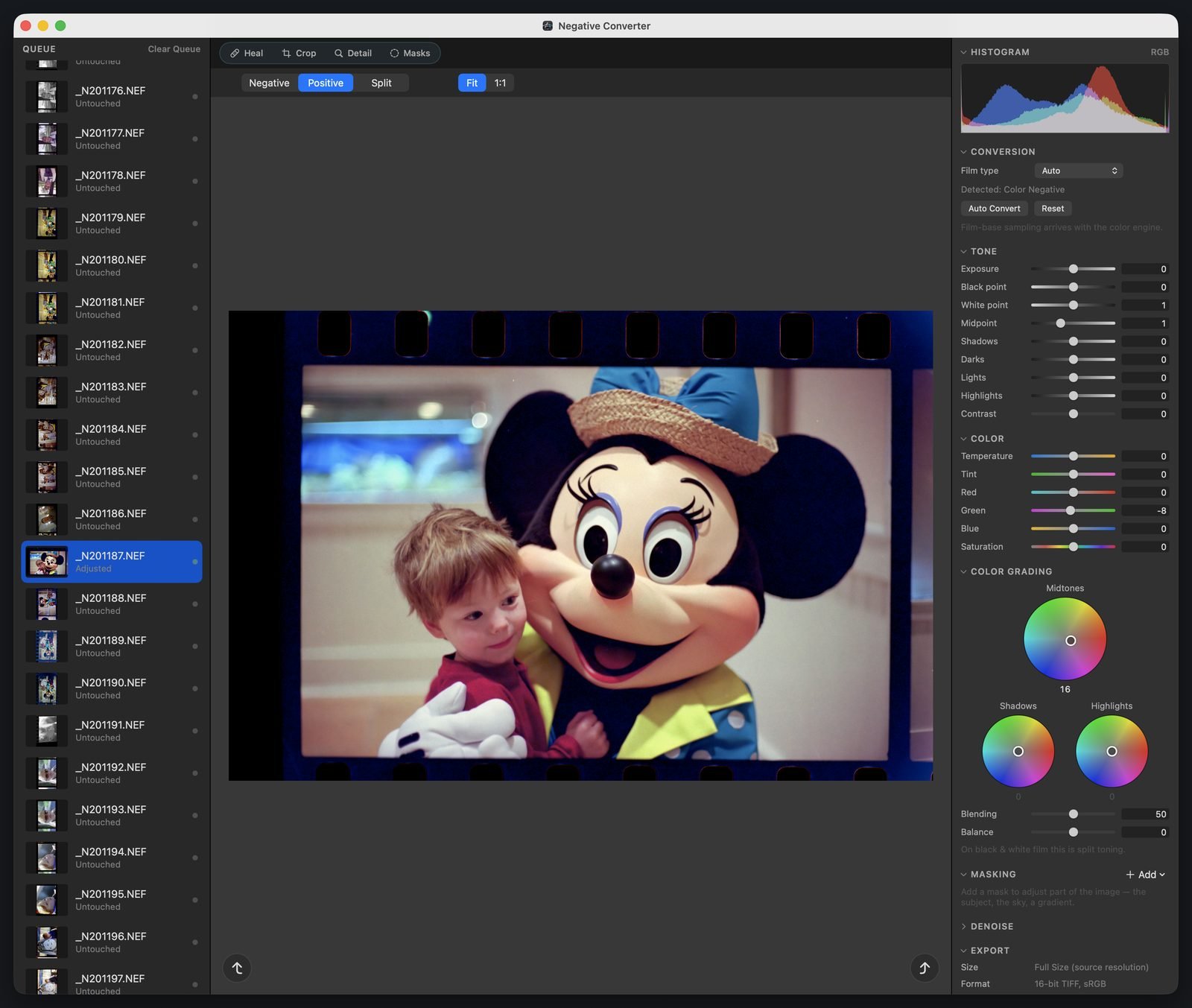
Restoration
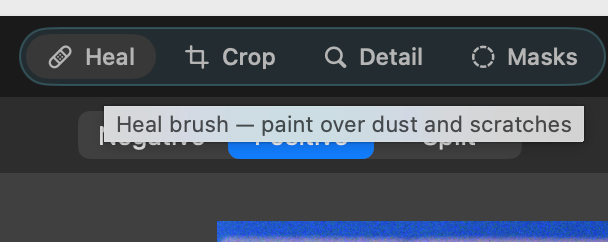
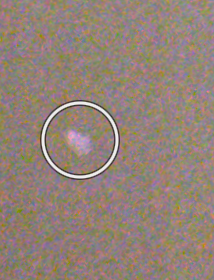
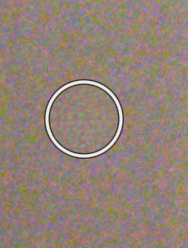
Film that has waited forty years in a shoebox arrives with dust, scratches, and blemishes baked into every scan. Paint over them with the heal brush and an on-device inpainting model synthesizes replacement detail that matches the surrounding grain — no cloning smudges, no soft spots, no uploads. Below: a real blemish on forty-year-old film, and the same spot one brush stroke later.
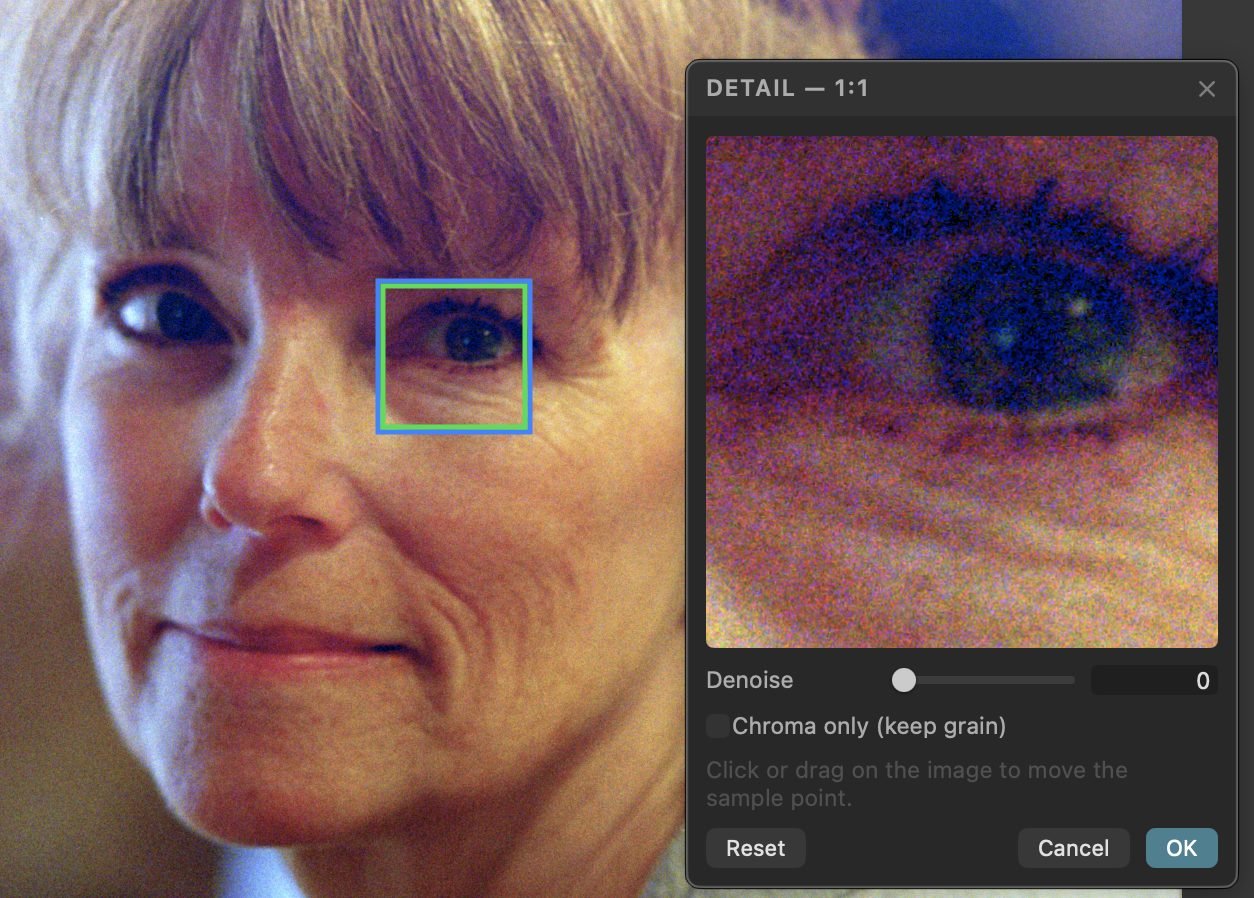
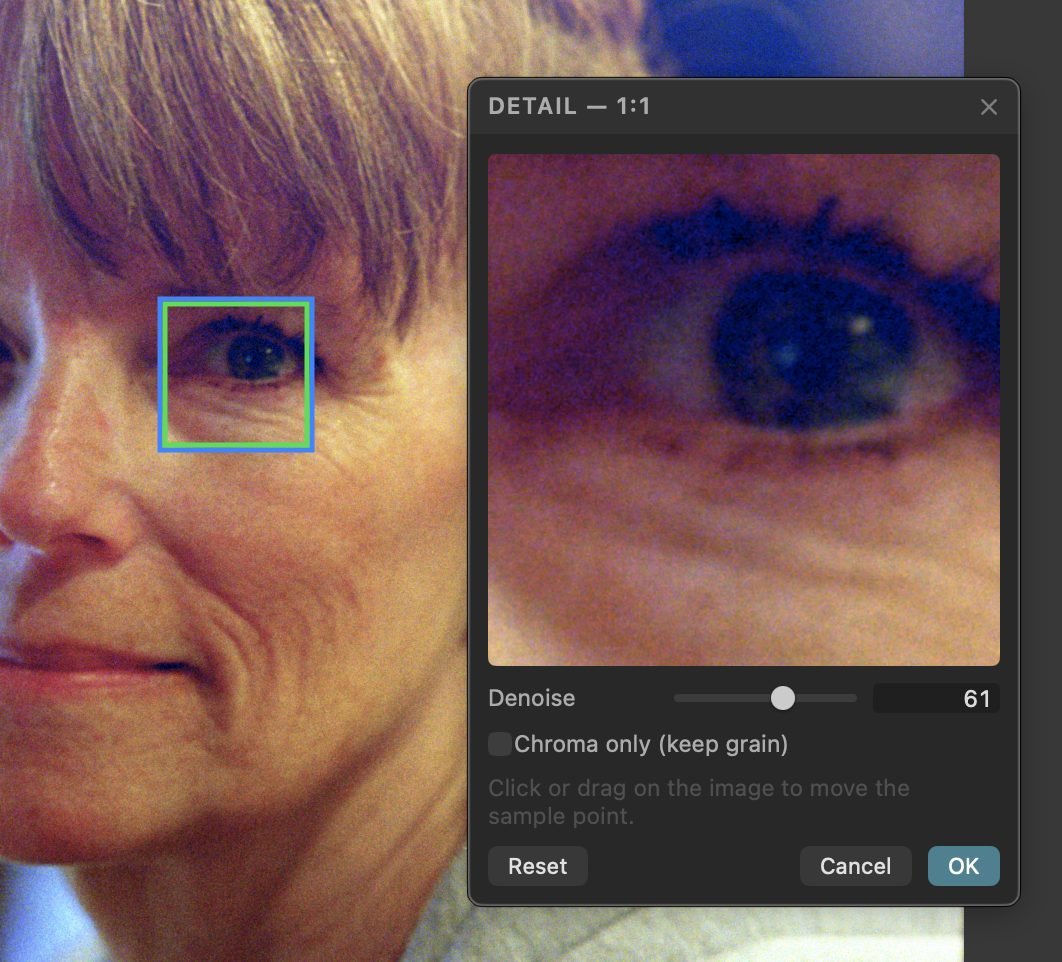
Denoise runs a dedicated real-noise model with a chroma-only mode that removes color noise while keeping the film grain, because grain is the photograph. A floating 1:1 detail loupe renders full-resolution previews in a fraction of a second, so you judge every decision on the detail that matters — an eye, a texture — before committing.
Output
Editing happens on a fast proxy; every export re-reads the original scan and re-runs the complete conversion at full resolution through a 16-bit, color-managed pipeline with no 8-bit shortcuts anywhere. The same scan and the same settings produce the identical file, byte for byte, today or in ten years.
A full-resolution archival master with embedded ICC profile — the file you keep forever.
Full-size or resized sharing copies at deliberately generous quality settings, with EXIF carried over from the source.
Every conversion decision saved as readable data beside the export — reopen, refine, or reproduce any frame, any time.
Batch-export whole selections with per-image progress and never-overwrite naming, or send a fresh 16-bit TIFF straight to Photoshop or any editor with Open Positive With… — always the full render, never a preview bitmap.
Your scan is the artifact — the closest thing to the original negative you'll ever have in a file. Negative Converter reads it, renders from it, and writes its results elsewhere. Nothing you do in the app can damage it.
Under the hood
PhotoLibrarian catalogues the results — keywords, ratings, people, and all — alongside the rest of your archive.